Pages

Showing posts with label tutorial. Show all posts

Tuesday

easy way of making waisted dress fit a shorter person [tutorial]

if you ask me, being short brings many adventages and I never had any real or mental problem with it:) when you're 158 cm you can comfortably squeeze yourself into whatever bus/plane/train seat which is great during long journeys. besides, being petite makes people instinctively more sensitive about you - I bet the great desmond morris would have a lot to say about that.

HOWEVER, it's pretty obvious that being shorter than average (just as being taller/with wider or narrower hips/smaller or larger bust etc.) may cause problems when it comes to clothes that are designed to fit „average” measurements. for me it very often means that when I try a dress that is supposed to be fitted in waist, it will simply have waist where I have hips and hips where I have thighs. a disastrous look, as you can imagine:) I want to show you a very simple way of rectifying that problem.

NOTE: if you're learning to sew, it's a great way of exercising your skills - it's a very simple, yet practical test.

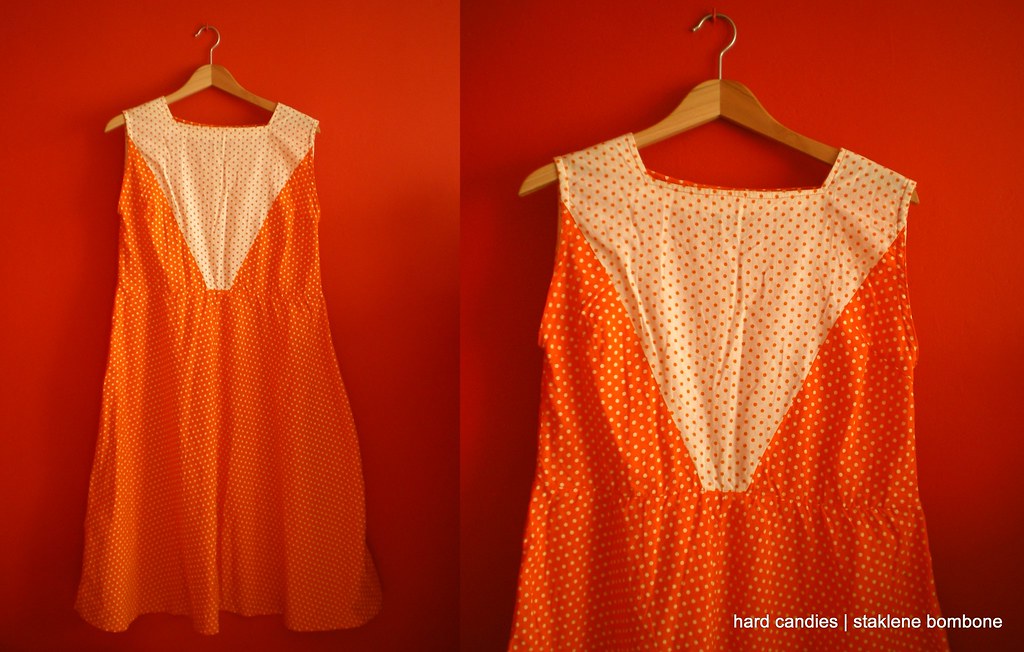
materials: all you'll need is basic sewing equipment (pins, scissors, measuring tape, sewing machine) and a waisted dress. I used a summer dress I found long time ago on a flea market. it's obviously too large and too „high” for me – the skirt part should start just beneath my waist and yet it hangs low, somewhere on my hips.
remebmer to take into concideration that a finished dress will be shorter than it's right now.

0408

here goes a very brief description of what my standard procedure in such circumstances is:
IMGP0061
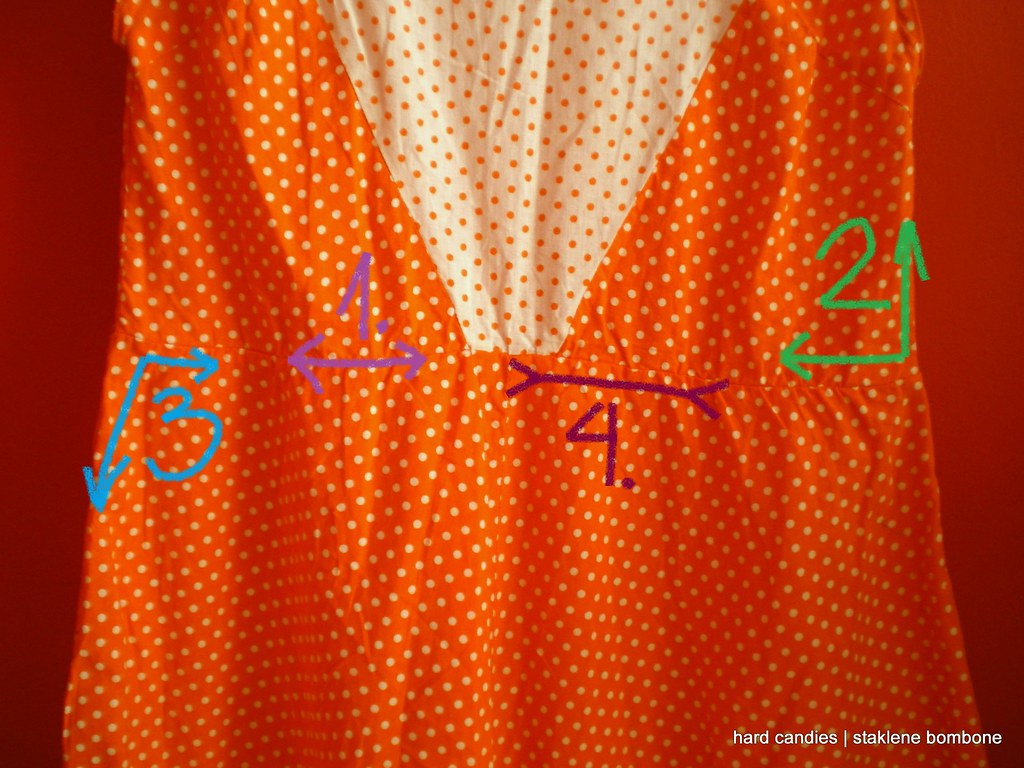
1.
unstitch the part with the skirt – you'll have two seperate parts now: a „skirt” and a „blouse”. Let's start with the second one.
2. take your measurement: measure how many cm there are from your arm to waist – that's going to be the lenght of the blouse (remember to leave it ca 1 cm longer – you'll need it to sew the two parts together). additionally if the dress is too large, measure your bust and waist – that's going to be the width of the upper and lower part of the blouse. Remember to turn it inside out, mark the measurements and simply narrow it. Try in on – if it's ok, you're done with this part, if something's too loose/tight/long, you'll need to unstitch it and do it again. a remark: if you want the blouse-part to be really fitted and the fabric doesn't stretch, you may need to sew in a zipper on the side/back. The dress from the photo was meant to stay a bit loose, so this time I didn't bother myself with a zipper as I can smoothly put it on through my head.
3. now, let's get to the skirt – if you want to have a plain dress, you will have to make sure that the upper part of the skirt is of the same width as the lower part of the blouse. that means, that you'll probably have to narrow the skirt a bit. of course, you may as well go for some ruffles/folds in the waist – in that case, don't narrow the skirt, just pin it to the blouse the way you fancy and sew it together.
4.
last part – turn both parts inside out, pin them together and simply sew it together. you're done.
img

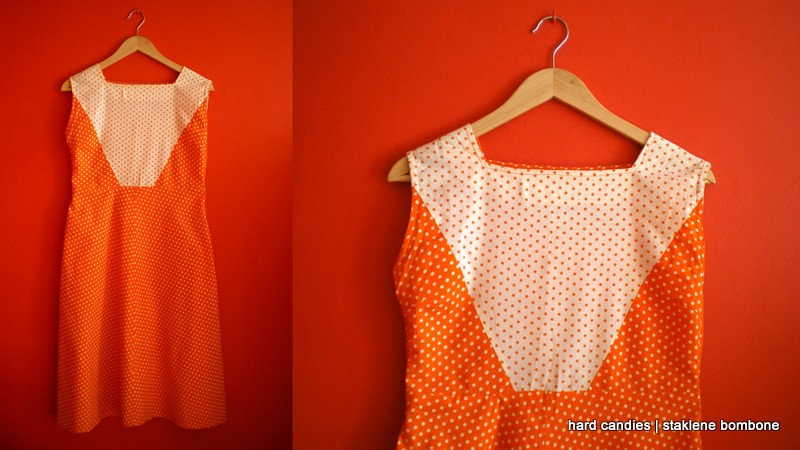
this is what I often do with my dresses and I find it the best and easiest way to make them fit well. there's no philosophy behind it and you don't have to be extremly skilled with a sewing machine (I defenitely am not;)).

cheers!
-oh

Monday

easy watch belt DIY

hey, hey!
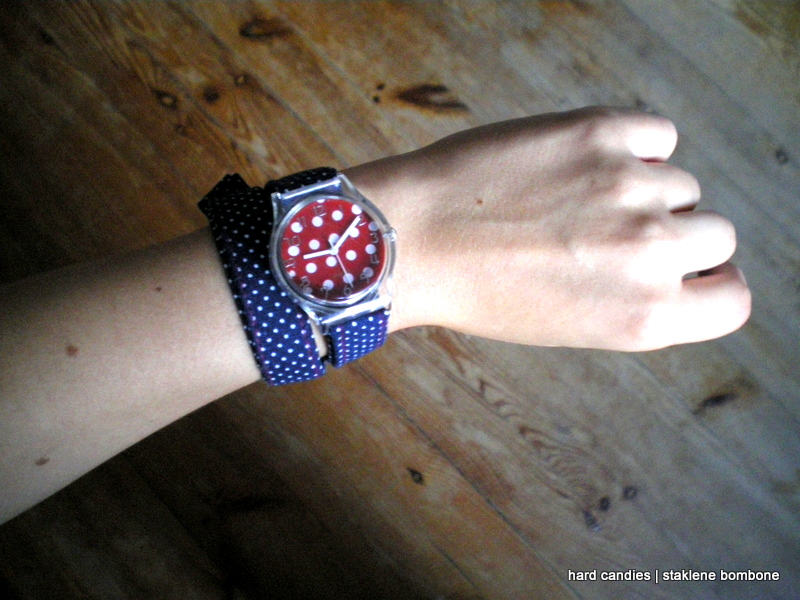
I don't like watches - they are vicious little machines that instead of helping you to be on time, show how late you actually are :) but anyway, once, being in lisbon I found a watch that felt like mine: simple in form, but red with white polka dot pattern. it was cheap, a bit trashy and it made me wander if I can break the chain and start working on my punctuality. I bought it and I wore it for quite some time.
I found it in one of the boxes last summer – it needed a new battery and it was painfully obvious that it's time for a new belt. and here we go!

materials: scissors, measuring tape, strong (but not too thick!) fabric of a chosen colour/pattern, a magnet popper (or a hook and loop fastener), interfacing fabric, iron, sawing machine


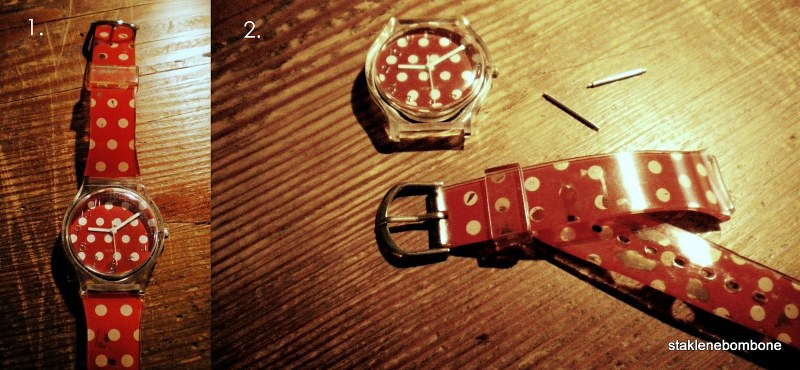
12-001 step 1, 2: remove the old belt (it shouldn't be difficult, but be careful not to break any part). make sure you secure the “pins” that hold the belt, we're going to need them!


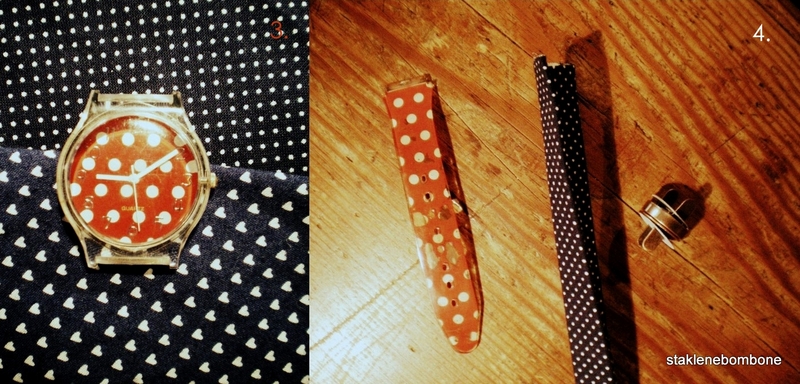
34-001 step 3: chose fabric for your belt
step 4: measurements: a/ measure the width of your old belt – the new one should be just as wide, b/ make sure that the popper you're going to use isn't too large/small for that width, c/ use a measuring tape to measure your wrist and decide how long your new belt should be. add about 5 mm from each side to close the belt. I wanted mine to fold around a wrist twice, so I've made it longer. you have the measurements of your belt? great, now multiply the width by 4 – you need to do it in order to fold the edges to the inside so that nothing unravels. it will also make your belt stronger.


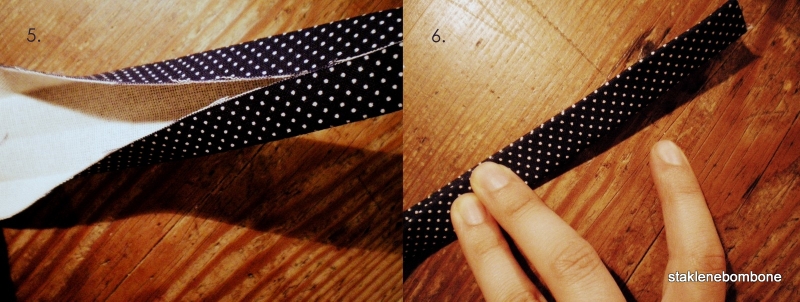
56-001 step 5: now, cut the fabric and iron the interfacing (in the picture it's the white “inside” of the belt). to secure all the edges and come back to the original width of your belt (now it's 4 times as wide as it should be at the end) you have to fold it in half (length) and iron this fold (the interfacing should be inside). You have two “halves” now and each of them should be folded once more (the edge of each half should reach the line made by the first fold). it all sounds a little complicated but it's actually really easy, you can try with a piece of paper first!
step 6: your edges are “inside” the belt. you can take the sewing machine now and sew the belt on both sides and ends keeping the seem pretty close to the edges. TIP 1: before you start sewing, make sure how your popper should be attached – some of them must be attached before the sewing. a hook and loop fastener could also be a good idea here – you can saw/glue it after you've sawn the belt. TIP 2: it's best to start sawing with closing the ends of the belt: you should fold the belt about 5 mm to the inside and sew it.


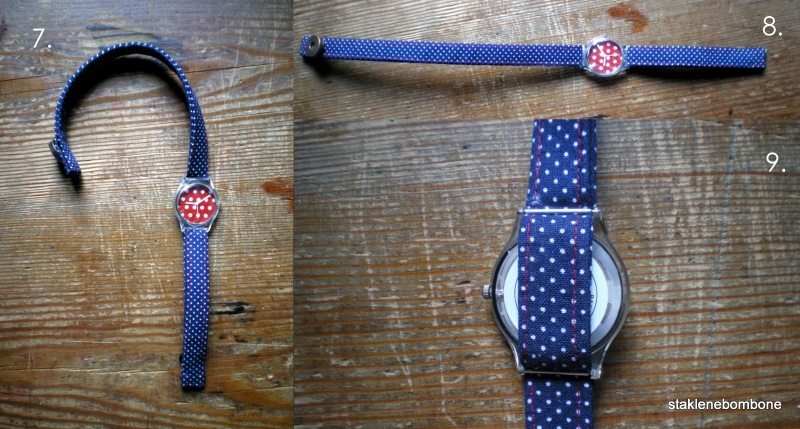
78-001 step 7, 8, 9: the belt is ready and all you have to do now is to reattach it to your watch. my watch is attached at one third of belt's length, as the longer part will fold around my wrist twice.

taaadam, we're done!

IMGP0010
good luck!
-oh

Saturday

heart shaped elbow-patch DIY

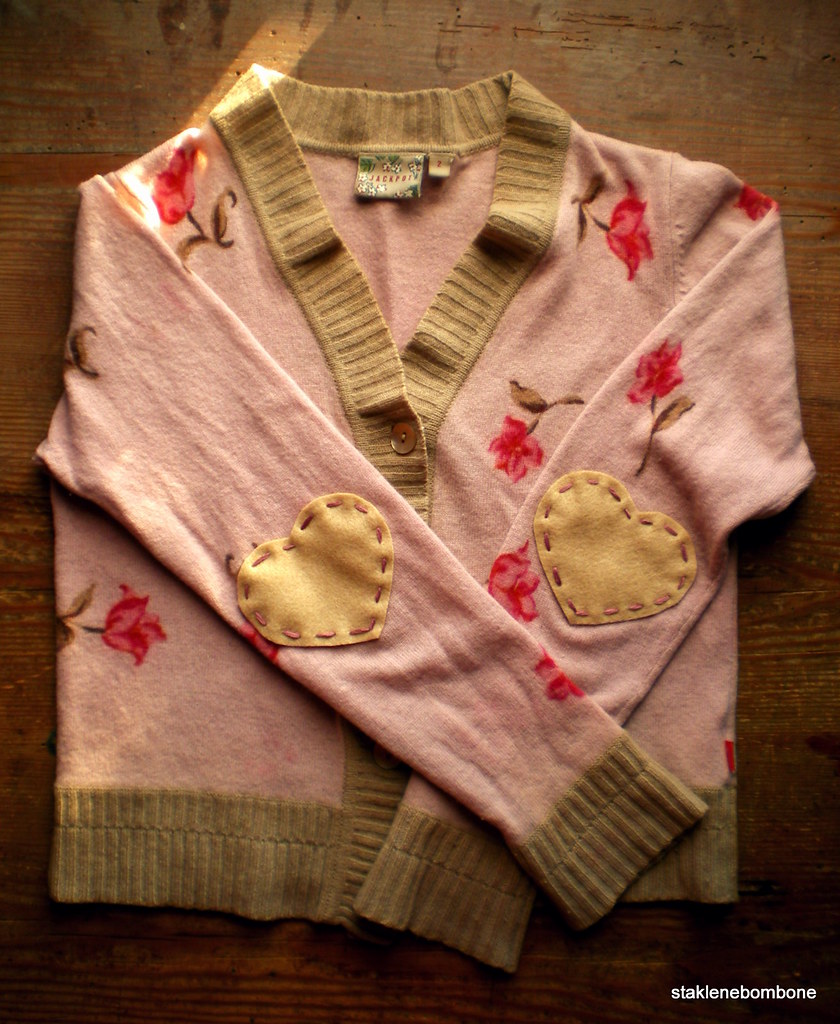
hello! I have another lazy DIY tutorial for you today:) it's so easy that I feel kind of silly even calling it a tutorial, but anyway I wanted to show it to you. I decided to add patches not only to refresh my beloved old cardigan, but mainly because the wool got really thin on both elbows and it needed some support not to fall apart. I didn't want the patches to be focal points, so I used colours that naturally blended with the cardigan.
so, here we go!
materials: scissors, pins, thread & needle, piece of paper, marker and fabric that you'll gonna make your patch of. I decided to use felt and would recommend it for any sorts of sweaters (they are both made of wool, so it will look naturally), but any other fabric/material that doesn't thread on the edges will be good (for example a piece of leather, suede etc.)

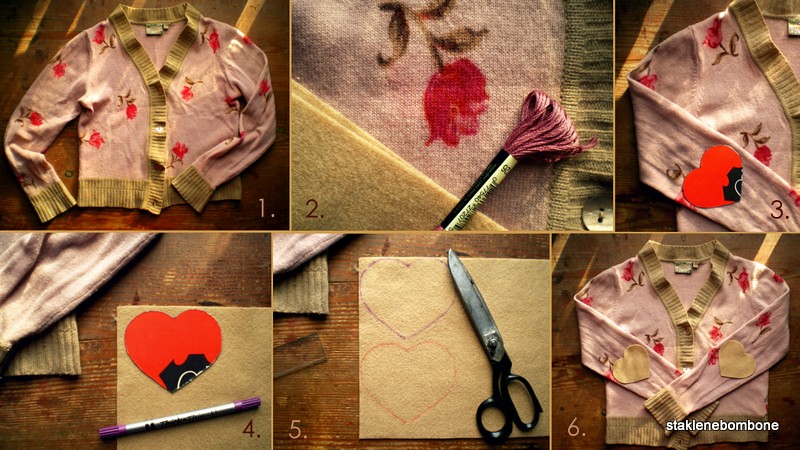
Kolaże21 step 1: put your cardigan on and mark where the patches should be placed (it's best to do it while actually wearing it). then put it flat and make sure you've marked the patches on both sides on the same hight
step 2: prepare felt, thread, scissors and a piece of paper. draw a shape that you want your patch to be on a piece of paper and cut it
step 3: place the paper form on the right spot on your cardigan and make sure it's not too big/small. adjust if you have to
step 4, 5, 6, 7: use a marker and a paper form to transfer the right shape to a piece of felt. place the patches on your cardigan and pin them


Kolaże20
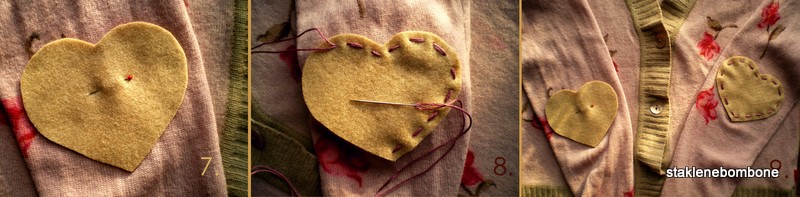
step 8, 9: start sawing! remember to keep it pretty close to the edge of your patch and be sure the seam is evenly following the edges.

we're done, enjoy! :)

IMGP0039

hugs,
-oh

easy purse makeover DIY

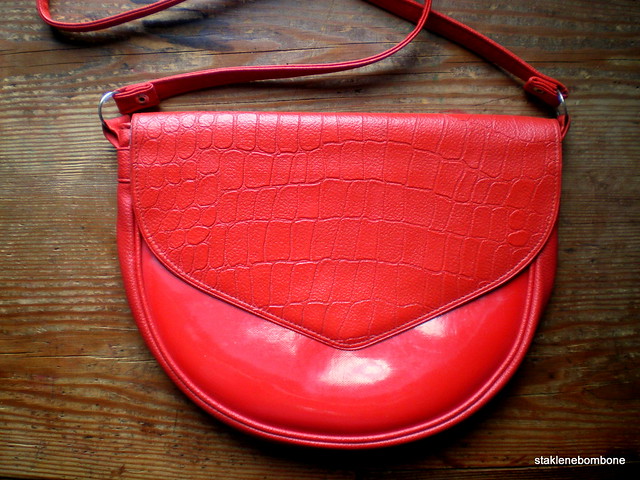
hello, hello! today I want to show you a purse that I've been wearing quite often lately.
I got it (or actually stole:)) from my mother, who bought it in a second hand shop - it looked all right, though - as for my taste - was a bit too dull and screamed for a tiny makeover...
this is how it used to look like originally:
easy purse makeover DIY

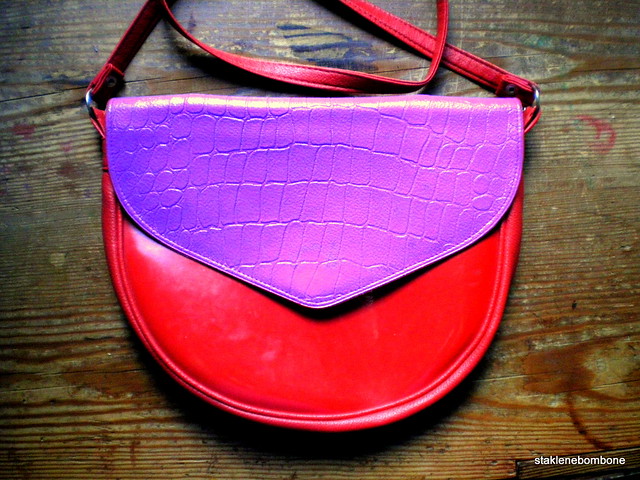
and this is how it looks like right now:) easy purse makeover DIY
I know that the combination of colours may seem a bit strange and not really fitted well, but I like it a lot. the purse itself is pretty simple and I wanted it to get wilder, so I decided that light violet will be just fine.

and this is how I did it (it's baby simple!):
materials - fine sandpaper, universal spray paint (I used some leftovers), paper tape
1 step - use the sandpaper to make the surface rough, otherwise the paint won't stick. and watch out - you don't want to make a hole!
2 step - use a paper tape to secure these parts of the purse that you don't want to paint
3 step - spray the paint carefully, most probably you'll need to cover it with two layers. just make sure you give the paint some time to get dry before second layer.
and just one little tip: when you paint with a spray paint, remember not to hold the can too close to the surface. a thick layer of paint won't look good!
easy? yes!

have a great weeken!
-oh

Tuesday

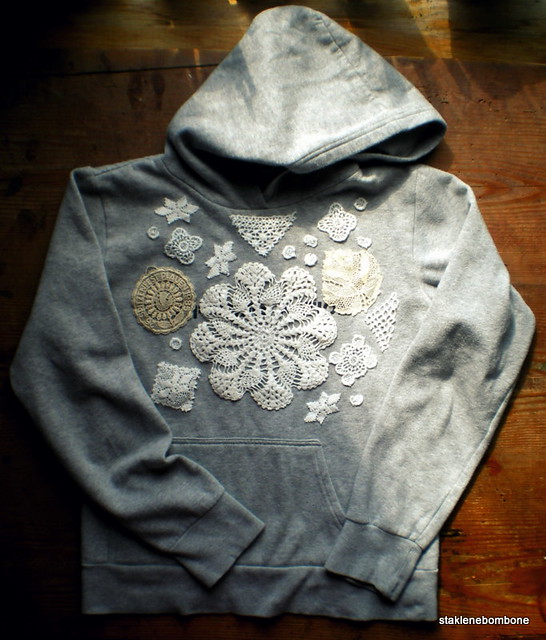
easy sweatshirt doily-application DIY

oh, and again I've managed to disappear from here for a little while. it wasn't planned, but all this fuss with moving and starting kind of a new life... well, I guess it just has to take time. I even missed the fact that autumn's here and it's not a baby autumn any more, but a real grown up and a bit gloomy lady.

I want to show you sth that I actually done last spring, but never had a chance to post here - an easy sweatshirt application DIY.
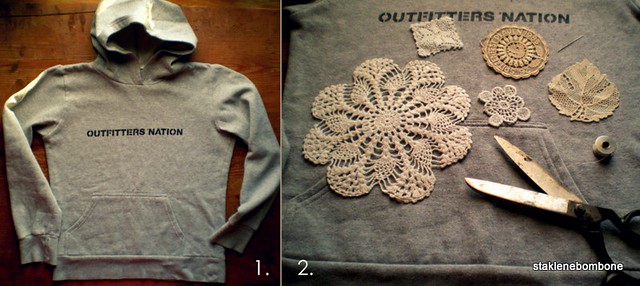
the idea was simple - I needed sth that would hide name of the brand (hate clothes with brands and logos all over) and because I was in a hurry, this had to be a quick action. and so I thought: how about some old doilies? :)

this is how it goes:

easy sweatshirt application DIY

1. put your sweatshirt flat
2. prepare all materials: doilies, scissors, pins, needle and thread same colour as the doilies


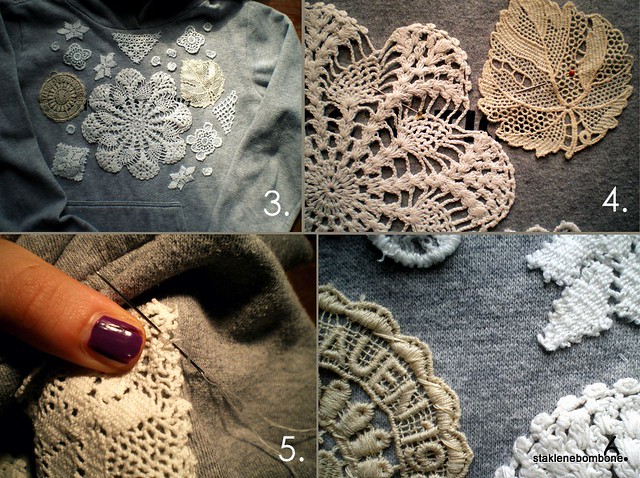
easy sweatshirt application DIY

3. place all doilies the way you want them to be attached
4. pin each doily
5.&  6. start sewing the doilies - it's best to start with the largest. sew them on the edges and procede to catch some stitches in the middle - it will prevent them from ruffling


easy sweatshirt application DIY
et voila;)

I've been wearing my sweatshirt for a few months now and there are no sad surprises - nothing's falling apart or ruffling even after quite a few encounters with a washing machine.
hope you'll like it:)

-oh

Saturday

learning to sew - an easy appliqué DIY

it was long time coming and finally happened: I sat at the sewing machine and pressed the foot control! yup, I learn to sew and I'm pretty excited about that;)
sewing was always one of the things that I really wanted to learn, but when I was small there was nobody to teach me and when I grow up I kind of got used to the fact that it's simply sth I don't know (silly, right?). and then I've met t. who could sew anything and my efforts (there were some trials...) seemed sensless. I thought I will never be able to sew like him, so why bother?
fortunatelly, I've shaken it off and finally sat at the machine. and you know what? it's been one hell of a ride:) there were some ups and downs, but in general there is only one thing I can say: I LOVE IT!

ok, that was a long introduction...
now, getting to the point, I guess the most important thing while learning to sew is to start with the right project. in my earlier endavors I used to be too ambitious, wanted to sew complicated things not really knowing how the machine works. you can imagine how frustrating and daunting it was. this time I thought of sth simple, sth doable for a sewing dummy: an appliqué.

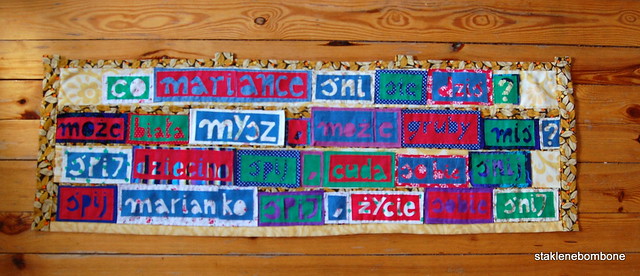
there was a nice opportunity: my friends got a baby-girl some time ago and I really wanted to make sth for her, so first I wrote a tiny-tiny lullaby and then sat to work:
1. prepared stripes of frayless fabric in different colours and cut the words out. I've made sure that words standing next to each other are in different colours
2. took some colourfull fabric leftovers and cut rectangles that serve as background for the words. to make sure the fabric won't fray, I've ironed the edges inwards (tip: fabrics with small patterns make the best background)
3. for the final layer: cut four larger stripes of fabric (one for each line of the lullaby). they have to be wide enough to fit all the words and leave some extra for sewing the stripes together
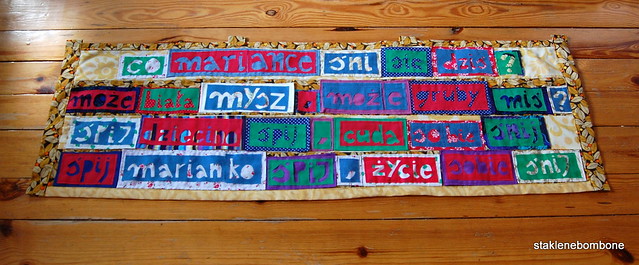
4. now, the best part: sewing all the layers together, one by one! first I've attached all words to their backgrounds sewing not only on the edges but also between letters, so that the frayless fabric sticks better. it's a pretty good exercise for a sewing starter. then, when all of my words had their backgrounds sewn together I placed them in line on the final layer, pinned and started to sew. there should be some space below and above the words so that you could sew all the larger stripes together - this was the most difficult part for me as the stripes were almost 1,5 m long:)
5. the end: framing. I've cut four stripes of material - two of the appliqué's hight and two of its lenght, again ironed the edges inwards and simply sewn it to the appliqué's edges.
6. I wanted my appliqué to be able to hang, so I've also sewn four little hooks on the upper edge

et voila!

all in all, it's pretty easy to do it. there is a lot of cutting, true, but also a lot of basic sewing and this is a great way of learning the easiest things: how the stitches go, how does the machine work, how to use the foot control etc. t. was right when he told me to experiment with the machine's settings and simply not to be affraid: when sth goes wrong you can always try doing it again. and again;)

yay, sorry for making it all soooo long. have a great weekend!
-oh

an easy appliqué DIY an easy appliqué DIY an easy appliqué DIY